

Recombinant Rat EGF Protein
- 500 μg
DESCRIPTION | ||
GeneNameSynonym | beta-urogastrone, EGF, epidermal growth factor, hEGF, HOMG4, URG, Urogastrone | |
Species | Rat | |
Accession | P07522 | |
Source | E.coli | |
SPECIFICATIONS | ||
Amino acid sequence | E.coli-derived Rat EGF protein, Asn 974-Arg 1026. | |
Molecular Weight | Approximately 6.0 kDa. | |
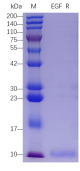
Purity | >97.0% as determined by SDS-PAGE. | |
Endotoxin | <1.0 EU/μg of the protein by the LAL method. | |
Formulation | Lyophilized from sterile PBS, pH 7.4.Normally 5%-8% trehalose and mannitol are added as protectants before lyophilization. | |
Reconstitution | Dissolved in sterile water, it is recommended to add 0.1% HSA or BSA for long-term preservation. | |
STORAGE | ||
Stability and Storage | 12 months from date of receipt at -20°C to -70°C. After reconstitution, it is stable at 4°C for 1 week or -20°C for almost 6 months (with carrier protein). It is recommended to freeze aliquots at -20°C or -80°C for extended storage. | |
BACKGROUND | ||
EGF is the founding member of the EGF-family of proteins. EGF contains 9 EGF-like domains and 9 LDL-receptor class B repeats. Rat EGF is a 6150 Da protein with 53 amino acid residues and three intramolecular disulfide bonds. Members of this protein family have highly similar structural and functional characteristics. Epidermal growth factor (EGF) participates in the progress of skin proliferation, differentiation and so forth.The EGF stimulation system for growth regulation is implicated in normal and neoplastic cell proliferation.The presence of EGF in gastric cancer is correlated with the degree of gastric wall invasion and lymph node metastasis. EGF is a growth factor that stimulates the growth of various epidermal and epithelial tissues in vivo and in vitro and of some fibroblasts in cell culture. It can also be found in human platelets, macrophages, urine, saliva, milk, and plasma. | ||
Data | ||
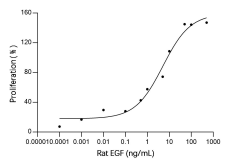
SDS-PAGE | Bioactivity | |
|
| |
Recombinant Rat EGF Protein was determined by SDS-PAGE with Coomassie Blue. | Measured in a cell proliferation assay using Balb/c 3T3 A31 mouse embryonic fibroblasts. The ED50 for this effect is typically 1-10 ng/mL. | |
仅供科研用途,不可用于临床诊断!
| 货号 | 名称 | 规格 | 价格 | 操作 |
|---|
| 货号 | 名称 | 规格 | 价格 | 操作 |
|---|
